What Are the Commonly Used Down Jacket Fabrics? Which Down Jacket Fabric is Better?
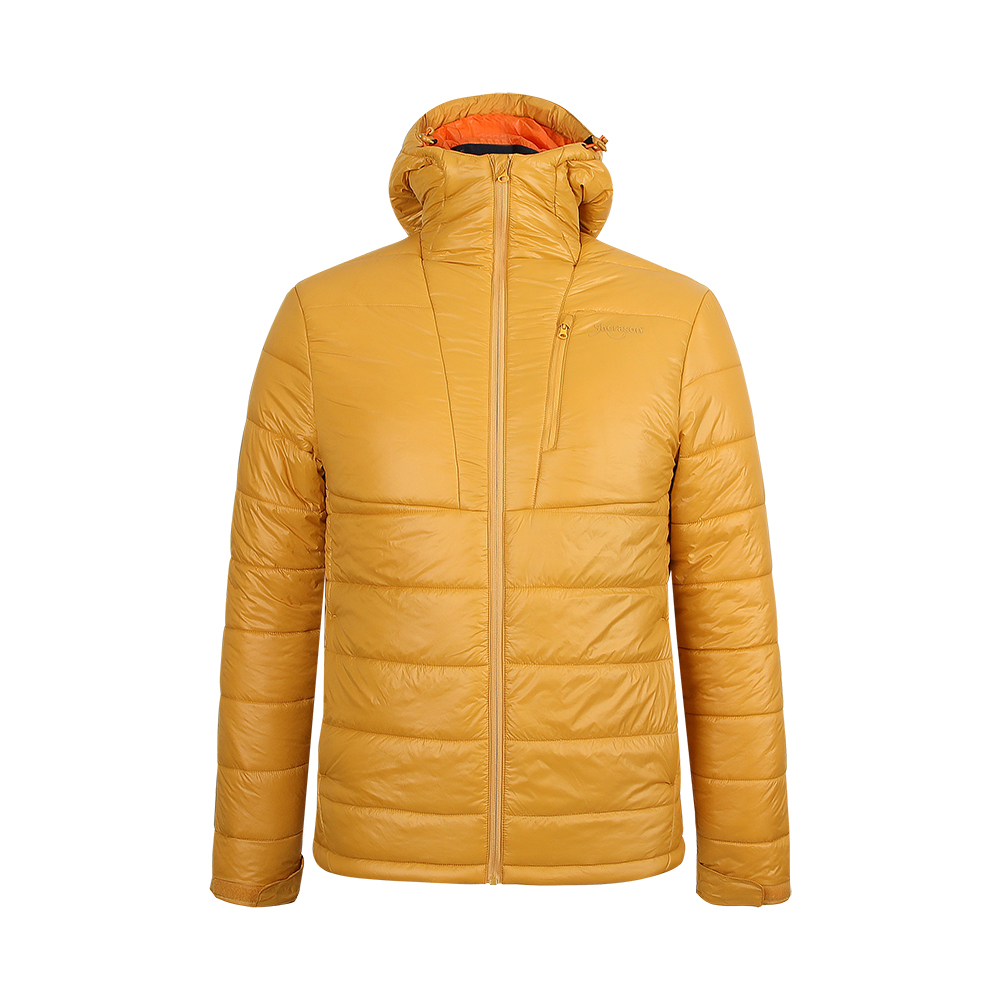
What are the commonly used down jacket fabrics? Which down jacket fabric is good? Down jacket fabrics should be down-proof, windproof and breathable, among which down-proof performance is particularly important. The quality of down-proof performance depends on the yarn density of the fabric used. The down fabrics currently sold on the market are mainly nylon taffeta and TC cloth. Generally, the yarn density is above 230T, 250T is the best, and below 230T it is difficult to ensure that the down does not leak out. When identifying the fabric, first look at its thickness. Generally speaking, thin ones are sparse and thick ones are dense. Secondly, pat it with your hands. If there is down flying out, the density must be below 230T.
The second step is to hold a certain part of the clothes and rub it slightly. If there is no fine down coming out, the density should be 250T. Because the nylon thick fabric has a layer of coating, it is better to treat it with bright, smooth and uniform.
Down jackets have the following three requirements for fabrics:
1. Breathable and windproof: Basically, all down jackets sold on the market have certain windproof properties. And breathability is a must for all clothes.
2. Anti- filling penetration: The most painful thing about wearing down jackets is that the clothes are often stained with down coming out of the down jackets, so generally good down jackets have certain anti-down properties.
3. Soft and thin: Today's down jackets tend to be lightweight, and the lightness and thinness of the down jacket fabric has an important position in the quality of the whole garment. Soft fabrics not only increase comfort but also help the down to exert its fluffiness and improve warmth retention.
Common questions about down jackets and down fabrics:
Q: How to identify down jackets?
A: 1. Look at the amount of down filling. Generally, it is better to choose one with more down. You can put the down jacket on the table and pat it with your hands. The higher the fluffiness, the better the quality of the down and the more down it contains.
2. Look at the color of the down. There are two types of down: pure white down and flower down. If you buy a down jacket with light-colored fabrics, you should choose one with pure white down inside, otherwise it will feel dirty when you wear it.
3. Look at the fabric. Avoid down jackets with multiple fabrics. The surface of the cotton anti-down fabric has a layer of wax, which is heat-resistant but poor abrasion resistance; the anti-down nylon silk fabric is wear-resistant and durable, with good anti-down properties but afraid of scalding and sun exposure. Generally speaking, it is better to buy down jackets made of TC fabrics.
4. Look at the workmanship. Check whether the seams are strong and whether there is any down leakage; whether the zipper and copper buckle are intact and smooth; whether the inside of the down jacket is flat, etc.
Q: What are the components of down jackets?
A: Down jackets are mainly made of down and coated fabrics.
1. Down: A mixture of small feathers and down (also called down). The former is called feathers, and the latter is called down. Duck and goose feathers are mostly used, and small feathers and down are separated after washing and used as wadding for down jackets. There are two types of down, gray and white, and white is better. The quality of down jackets is related to the filling amount and down content. The filling amount refers to the weight of down filled in a down jacket, expressed in grams, generally about 250 grams. The less the filling amount, the poorer the warmth retention; the down content refers to the content of down in the down, expressed in percentage, generally 50-80%. The higher the down content, the better the quality. Because down can prevent the body's heat from dissipating and it feels soft, but it is difficult to swell up when it is compressed or wet, while the small feathers can make the clothes fluffy and swell to keep more air inside the clothes, which helps to keep warm, but too many small feathers will cause the heat to dissipate easily and give the feeling of hair stalks. Therefore, down and small feathers must be combined in a proper proportion.
2. Coated fabrics are made of silk, cotton, cotton-polyester and other fabrics with high density of warp and weft yarns. After rolling and pressing, the gaps between the warp and weft yarns are reduced. Then, a polymer slurry is applied to form a cross-linked transparent film covering layer with the fabric to close the gaps between the warp and weft yarns of the fabric. Fluorophosphorus resin or silicone waterproofing agent is added to the coating slurry to make the fabric anti-down and anti-water seepage and more comfortable.
Down jacket fabric types:
1.Waterproof coated (laminated) fabrics
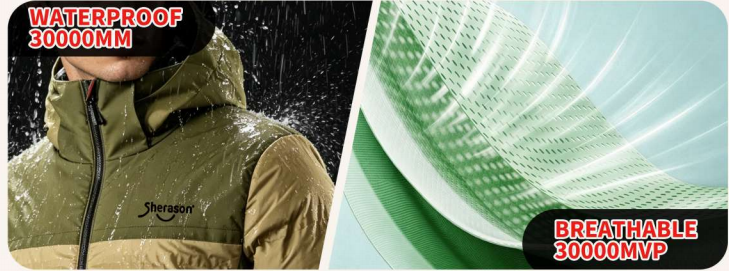
This type of fabric is somewhat similar to the fabric of a jacket, with waterproof and breathable properties, and is generally used for professional mountain down jackets. However, the difference is that the fabric is lighter, thinner and softer than the fabric of a jacket. In addition, because down jackets are generally used in cold environments, they are mainly targeted at the meltwater of solid water from ice and snow, so the requirements for the water pressure resistance of the fabric are not as high as those of jackets, and most down jackets made of waterproof fabrics do not need to be glued. Another point to note is that some cheap down jackets use non-breathable coated fabrics to prevent down leakage. If it is only for daily wear, it can be barely considered.
2.High-density waterproof fabrics
have a very high density, generally above 290T. Then, the surface fabric is fused at high temperature to reduce the gaps in the fabric and improve the down-proof property. The fabric is the lightest and softest among all down jacket fabrics, and it also has windproof, water-repellent and breathable properties. This type of fabric is the most widely used fabric for down jackets and down sleeping bags, but the level of post-processing technology has a great influence on the down-proof property of the fabric.
3.Ordinary woven fabrics with down-proof cloth generally use low-density nylon or polyester. When making down jackets, adding anti-down cloth to the inside of the fabric can play an anti-down role, and the anti-down performance is good. The disadvantage is that the anti-down cloth affects the softness of the down jacket and increases the weight of the whole garment. The most important thing is that if inferior anti-down cloth is used, the air permeability of the down jacket will be greatly reduced, and after washing, the anti-down cloth is easy to be damaged or agglomerated. Another way is to apply anti-down treatment, which is to brush a layer of anti-down glue on the inner layer of the fabric. The fabric feels very poor and is not breathable.
How to choose Outdoor jacket? Let's unveiling the Secrets of Outdoorwear
The Power of Waterproof and Breathable Fabrics Stay Dry and Comfortable All Day
Related Article