How Can Waterproof Fabric Maintain Level 4 Water Repellency After 10 Washes?

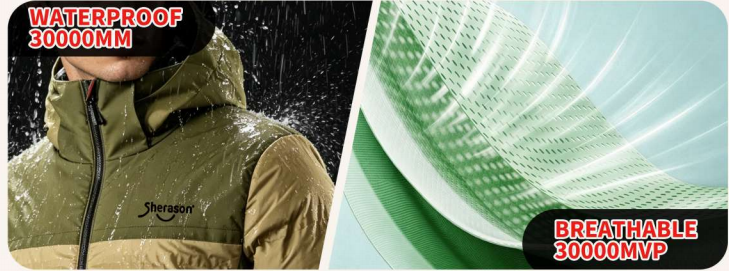
"Maintains Level 4 water repellency even after 10 washes." For consumers, this is both a quality promise and a technical mystery—how is such lasting waterproof performance achieved? This article delves into the technical principles and key processes behind it.
1. Understanding the Science Behind "Level 4 Water Repellency"
In the textile industry, water repellency is rated using standards like ISO 4920 or AATCC 22, which simulate rainwater spray and evaluate surface wetting:
Level 1: Surface completely wetted
Level 3: Surface partially wetted
Level 4: Only small, randomly adhering water droplets remain (passing grade)
Level 5: Surface completely unwetted
Achieving Level 4 after 10 washes means the fabric must possess two key characteristics:
1.High initial water repellency (typically Level 5)
2.Exceptional durability to withstand physical and chemical degradation from washing
2. Core Technology: The Synergy of a Triple Protection System
1. Enhanced Base Fabric Treatment
High-end fabrics undergo molecular-level modifications at the yarn stage:
Graft modification of fiber surfaces with fluoropolymers
Plasma treatment to improve surface energy uniformity
Use of nano-level cross-linking agents to strengthen the bond between fibers and water repellents
2. Innovations in Durable Water Repellent (DWR) Agents
Traditional C8 DWR agents have been phased out due to environmental concerns. Modern technologies now utilize:
C6 Fluorine-Free Technology: Balances environmental friendliness with enhanced durability through elongated carbon chains and branched structures
3D Network Film Formation: DWR agents form a three-dimensional cross-linked network on the fabric surface
Dual Curing Systems: Combines thermal and chemical cross-linking for robust adhesion
3. Optimized Fabric Structural Engineering
Special-Shaped Cross-Section Fibers: Fibers with cross-shaped, Y-shaped, or other irregular cross-sections increase surface roughness
Gradient Density Weaving: Fabric structures with gradually increasing density from the inside out
Micro-Protrusion Surface Treatment: Mimics the micro-nano structure of lotus leaves
3. The 10-Wash Challenge: Technological Solutions Breaking Industry Limits
Analysis of Washing-Induced Damage Mechanisms:
Mechanical friction causes localized damage to the water-repellent film
Chemical erosion from surfactants in detergents
Molecular chain relaxation due to high-temperature washing
Innovative Solutions:
1. Molecular Anchoring Technology
Incorporates dual reactive groups into DWR molecules
One end bonds with fibers, while the other self-crosslinks to form a film
Creates a composite structure similar to "reinforced concrete"
2. Microcapsule Slow-Release Technology
Encapsulates repair components in microcapsules
Capsules rupture during washing to release repair agents
Achieves a "stronger with washing" self-repairing effect
3. Multi-Layer Gradient Coating Process
First Layer: Base adhesion layer (nano-silica-based materials)
Second Layer: Main water-repellent layer (modified polyurethane)
Third Layer: Protective layer (abrasion-resistant transparent resin)
Each layer is precisely controlled to 3–5 microns in thickness
4. Authoritative Testing and Verification Systems
Leading international brands adopt verification standards that far exceed conventional requirements:
Accelerated Aging Tests: Equivalent to 50 home laundry cycles
Multi-Dimensional Abrasion Tests: Simulates real-world wear and tear
Chemical Stability Tests: Evaluates resistance to sweat, sunscreen, and other substances
Low-Temperature Flexibility Tests: Ensures the coating remains crack-free in cold conditions
5. Consumer Care Guidelines
Proper care can significantly extend the waterproof lifespan of your jacket:
Washing Recommendations:
Use dedicated waterproof garment detergents
Water temperature should not exceed 30°C (86°F)
Avoid fabric softeners and bleach
Maintenance Tips:
Tumble dry on low heat for 20 minutes to reactivate the DWR
Regularly refresh with waterproofing sprays
Minimize dry cleaning
6. Industry Trends and Future Directions
Emerging Technologies:
Bio-Based Waterproof Materials: Eco-friendly DWR agents derived from plant extracts
Smart Responsive Materials: Fabrics that automatically adjust breathability based on humidity levels
Structural Waterproofing: Biomimetic fabrics requiring no coatings at all
Conclusion
Achieving "Level 4 water repellency after 10 washes" is not a marketing gimmick—it represents the culmination of materials science, textile engineering, and chemical innovation. This achievement reflects:
Environmental Commitment: Adoption of green chemical technologies
Quality Pursuit: Rigorous testing and validation
User-Centric Design: Addressing real consumer pain points
This is the most tangible interpretation of "durable quality" and a testament to the advancements modern textile engineering offers outdoor enthusiasts.
Premium Men’s Ski Jacket – Built for Extreme Winter Performance
Related Article