What Are the Safety Considerations for Kids Ski Jackets?

As winter approaches and families plan their snowy adventures, ensuring children’s safety on the slopes becomes a top priority. A ski jacket is more than just a piece of warm clothing—it’s a critical layer of protection that can significantly impact a child’s comfort, visibility, and overall safety in cold, dynamic mountain environments. Whether you’re a seasoned ski parent or planning your first family trip to the slopes, understanding the key safety features of kids’ ski jackets is essential.
Here’s a comprehensive guide to the most important safety considerations when choosing a ski jacket for your child.
1. High Visibility: Stand Out in the Snow
In snowy or low-light conditions, visibility is crucial for safety. A brightly colored or high-visibility jacket helps your child stand out against the white background, making them easier for other skiers, snowboarders, and lift operators to spot.
Bright Colors: Opt for fluorescent shades like neon yellow, orange, pink, or electric blue.
Reflective Details: Look for jackets with reflective strips or logos on the sleeves, chest, or back. These enhance visibility during early mornings, cloudy days, or evening skiing.
2. Proper Fit and Adjustability
An ill-fitting jacket can restrict movement, reduce warmth, and even pose safety risks like tripping or snagging on equipment.
Avoid “Growing Room”: While it’s tempting to buy a larger size for longevity, an oversized jacket can compromise mobility and insulation. Choose a fit that allows for layering without excess fabric.
Adjustable Features: Look for jackets with adjustable cuffs, hems, and hoods. A helmet-compatible hood is essential—it should fit snugly over a ski helmet without obstructing vision.
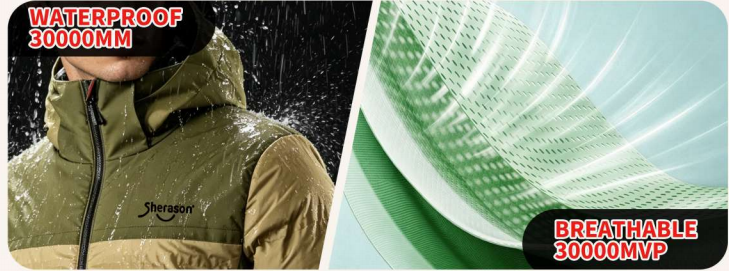
3. Waterproof and Breathable Protection
Staying dry is key to staying warm. Wet clothing, whether from snow or sweat, can lead to rapid heat loss and discomfort.
Waterproof Rating: Choose jackets with a waterproof rating of at least 5,000mm to withstand snow, sleet, and wet conditions.
Breathability: A breathability rating of 5,000g/m²/24hr or higher ensures sweat vapor can escape, keeping your child dry from the inside out.
Fully Taped Seams: Check that all critical seams are sealed to prevent water from seeping through stitching holes.
4. Insulation and Weather Adaptability
The right insulation ensures warmth without bulk, allowing freedom of movement.
Climate-Appropriate Insulation: For very cold climates, consider down or synthetic-insulated jackets. For milder conditions or active skiers, lightweight or layered insulation may suffice.
Ventilation Options: Jackets with underarm zippers or other ventilation features help regulate temperature during high-energy activities.
5. Safety-Focused Design Details
Small design elements can make a big difference in safety.
No Strangulation Hazards: Avoid jackets with long, loose drawstrings around the neck or waist. Opt for internal or short, secure adjustment systems.
Easy-to-Use Zippers: Ensure zippers are durable, smooth-gliding, and easy for little hands to operate. Storm flaps over zippers add extra wind and snow protection.
Reinforced Durability: Kids play hard—look for reinforced elbows, shoulders, and cuffs to withstand falls and friction from ski equipment.
6. Comfort and Ease of Use
A comfortable child is a safer, happier skier.
Soft, Non-Irritating Materials: Ensure linings and collar materials are gentle on the skin.
Practical Pockets: Secure, accessible pockets for hand warmers, lift passes, or snacks add convenience.
Easy Care: Machine-washable and durable fabrics make maintenance simple, ensuring the jacket remains effective over time.
Conclusion
Choosing the right ski jacket for your child involves more than style or brand preference—it’s about integrating visibility, protection, and practicality into a single garment. By prioritizing these safety considerations, you can ensure your young skier stays warm, dry, and safe while enjoying the thrill of the slopes.
The Next Evolution: From Recycling to Circularity
The Ultimate Ultralight 3-Layer Shield: Faroe Men's Cycling Vest at Only 95 GSM
Related Article