
Engineered for the Elements: The Science Behind High-Performance Outdoor Apparel
author: Florine
2025-08-22

For the serious outdoor enthusiast, clothing is far more than just a fashion statement—it's a critical piece of equipment. Whether facing relentless wind on a ridge, sudden precipitation on a trail, or sub-zero temperatures at camp, the right gear is the difference between a triumphant summit and a dangerous retreat. At [Your Company Name], we don't just manufacture clothing; we engineer portable protection systems designed to empower exploration.
1. Advanced Material Science: The Foundation of Performance
The core of modern outdoor apparel lies in innovative fabric technology. Performance is engineered at the fiber level.
Waterproof & Breathable Membranes: Technologies like GORE-TEX® and proprietary eVent® utilize micro-porous membranes with over 9 billion pores per square inch. These pores are small enough to block external water droplets (with hydrostatic head ratings often exceeding 28,000mm) yet large enough to allow internal water vapor to escape (with MVTR ratings over 15,000 g/m²/24h). This creates an unparalleled microclimate, keeping users dry from both rain and sweat.
Insulation: The debate between down and synthetic is defined by conditions. High-fill-power premium goose down offers an unbeatable warmth-to-weight ratio for dry, cold environments. Meanwhile, advanced synthetic insulations like Primaloft® Gold replicate down's loft and provide crucial up to 96% heat retention even when wet, making them indispensable for damp or variable climates.
High-Performance Fleece: Brands like Polartec® have revolutionized fleece, creating fabrics that offer exceptional warmth, breathability, and stretch. Their advanced grids and textures manage moisture and maximize warmth without adding bulk or weight.
The core of modern outdoor apparel lies in innovative fabric technology. Performance is engineered at the fiber level.
Waterproof & Breathable Membranes: Technologies like GORE-TEX® and proprietary eVent® utilize micro-porous membranes with over 9 billion pores per square inch. These pores are small enough to block external water droplets (with hydrostatic head ratings often exceeding 28,000mm) yet large enough to allow internal water vapor to escape (with MVTR ratings over 15,000 g/m²/24h). This creates an unparalleled microclimate, keeping users dry from both rain and sweat.
Insulation: The debate between down and synthetic is defined by conditions. High-fill-power premium goose down offers an unbeatable warmth-to-weight ratio for dry, cold environments. Meanwhile, advanced synthetic insulations like Primaloft® Gold replicate down's loft and provide crucial up to 96% heat retention even when wet, making them indispensable for damp or variable climates.
High-Performance Fleece: Brands like Polartec® have revolutionized fleece, creating fabrics that offer exceptional warmth, breathability, and stretch. Their advanced grids and textures manage moisture and maximize warmth without adding bulk or weight.
2. Systematic Layering: The Strategic Approach
Professional outdoor apparel operates on the layering principle, where each layer has a distinct, complementary function.
Base Layer (Moisture Management): This is the foundation. Made from Merino wool or polyester blends, these garments use capillary action to wick perspiration away from the skin to the outer layers where it can evaporate. Merino offers natural odor resistance, while synthetics provide superior drying speed.
Mid Layer (Insulation): This layer traps warm air close to the body. This category includes lightweight fleece jackets, insulated gilets, and lightweight synthetic/down jackets. The key is balancing warmth, compressibility, and breathability.
Shell Layer (Protection): The final barrier against wind, rain, and snow. Hardshells offer ultimate protection with fully taped seams and rugged face fabrics. Softshells provide a more breathable and flexible alternative for high-output activities where harsh rain is less likely.
Professional outdoor apparel operates on the layering principle, where each layer has a distinct, complementary function.
Base Layer (Moisture Management): This is the foundation. Made from Merino wool or polyester blends, these garments use capillary action to wick perspiration away from the skin to the outer layers where it can evaporate. Merino offers natural odor resistance, while synthetics provide superior drying speed.
Mid Layer (Insulation): This layer traps warm air close to the body. This category includes lightweight fleece jackets, insulated gilets, and lightweight synthetic/down jackets. The key is balancing warmth, compressibility, and breathability.
Shell Layer (Protection): The final barrier against wind, rain, and snow. Hardshells offer ultimate protection with fully taped seams and rugged face fabrics. Softshells provide a more breathable and flexible alternative for high-output activities where harsh rain is less likely.
3. Precision Engineering: Details Make the Difference
We understand that performance is in the details. Our manufacturing process incorporates features demanded by professionals worldwide:
Fully Taped Seams: Critical on shell layers, this process seals every stitch hole with waterproof tape, preventing water ingress.
YKK® Zippers: Renowned for their reliability. #5 and #10 coil zippers are used throughout, with aquaguard® waterproof coatings on critical seams.
Strategic Venting: Zippered underarm vents (pit zips) and core vents allow for rapid heat dump during high-exertion phases without removing layers.
Anatomical patterning: Pre-curved sleeves, gusseted underarms, and articulated knees allow for a full range of motion without fabric ride-up or restriction.
Adjustable Features: Helmet-compatible hoods, adjustable cuffs, and drawcord hems allow for a precise, secure fit to seal out the elements.
Partner with a Professional Supplier
We understand that performance is in the details. Our manufacturing process incorporates features demanded by professionals worldwide:
Fully Taped Seams: Critical on shell layers, this process seals every stitch hole with waterproof tape, preventing water ingress.
YKK® Zippers: Renowned for their reliability. #5 and #10 coil zippers are used throughout, with aquaguard® waterproof coatings on critical seams.
Strategic Venting: Zippered underarm vents (pit zips) and core vents allow for rapid heat dump during high-exertion phases without removing layers.
Anatomical patterning: Pre-curved sleeves, gusseted underarms, and articulated knees allow for a full range of motion without fabric ride-up or restriction.
Adjustable Features: Helmet-compatible hoods, adjustable cuffs, and drawcord hems allow for a precise, secure fit to seal out the elements.
Partner with a Professional Supplier
For distributors and brands looking to source high-quality outdoor apparel, partnering with a manufacturer that understands these technical nuances is paramount. At [Your Company Name], we combine cutting-edge material sourcing with precision manufacturing and strict quality control (QC) protocols.
Beyond the Fabric: Engineering Performance for the Wild
Features of Cycling Insulated Jackets
Related Article

"Maintains Level 4 water repellency even after 10 washes." For consumers, this is both a quality promise and a technical mystery—how is such lasting waterproof performance achieved? This article delves into the technical principles and key processes behind it.
How Can Waterproof Fabric Maintain Level 4 Water Repellency After 10 Washes?
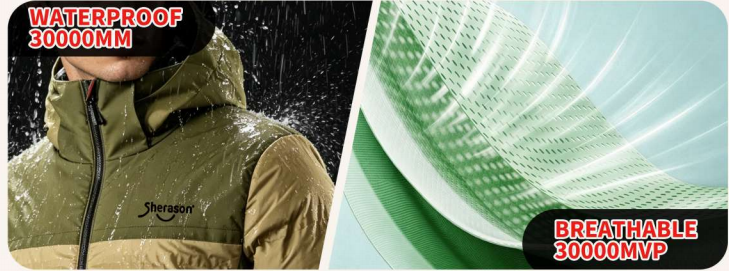
Our advanced materials deliver up to 30K waterproof and 30K breathable performance, ensuring maximum protection from rain, snow, and wind while maintaining superior comfort and moisture control
Premium Men’s Ski Jacket – Built for Extreme Winter Performance
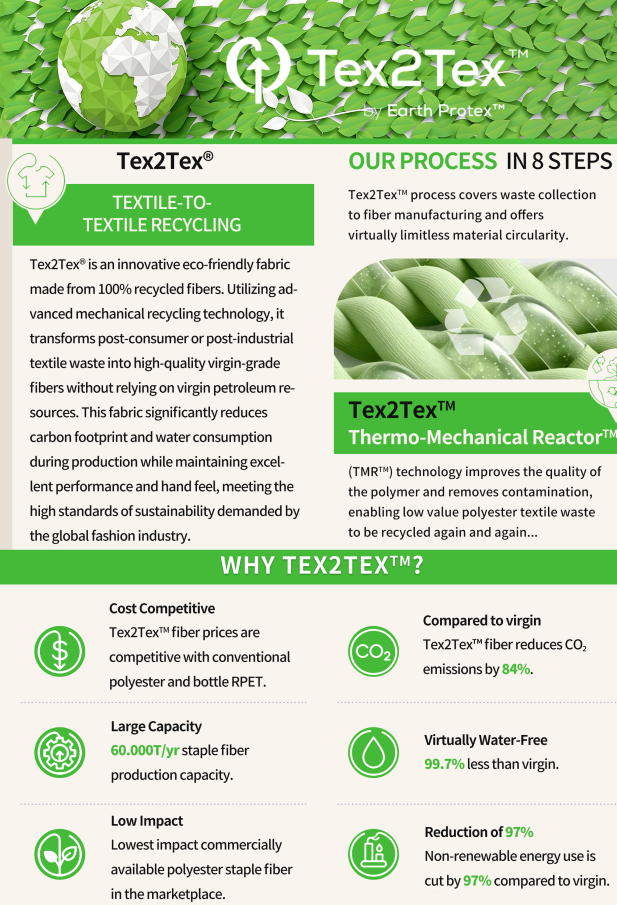
The fashion industry is at a crossroads. On one hand, demand for sustainable materials has never been higher. On the other, textile waste continues to pile up, with only a fraction being truly recycled into new garments.
Tex2Tex™: Closing the Loop on Textile Waste – Without Compromising on Quality or Cost

While bottle-based RPET was the first step, Textile-to-Textile (T2T) recycling represents the true "closed-loop" future. By transforming garment waste back into high-performance fibers, we offer a solution that cuts $CO_{2}$ by 84% without compromising the technical integrity of 2.5L/3L waterproof jackets.
The Next Evolution: From Recycling to Circularity