10K vs 20K Waterproof Rating: Which is Better? A Practical Guide for Choosing Outdoor Gear

When shopping for rain jackets, ski shells, or hiking jackets, you'll inevitably encounter the term "waterproof rating," particularly the numbers "10K" and "20K." Which one is truly better? It's not just about comparing numbers—it's about your comfort, the type of activity, and your budget. Let's dive in.
What is the "K" Waterproof Rating? (The Water Column Test)
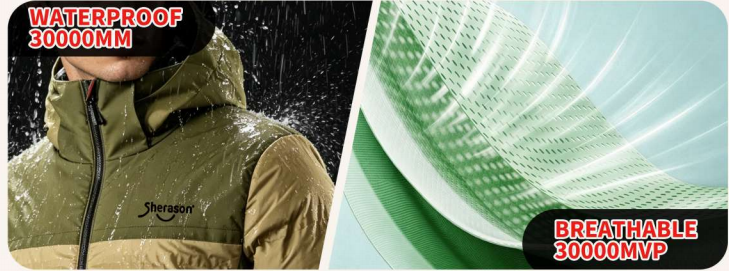
Waterproof ratings are typically expressed in millimeters (mm) (e.g., 10,000mm = 10K). This does not refer to fabric thickness but measures its ability to resist water pressure in a lab test.
In simple terms: A vertical column of water is pressed against the fabric, and the height of the water column is recorded before water penetrates. 10K means the fabric can withstand 10,000 millimeters of water pressure without leaking. 20K can withstand 20,000 millimeters.
Direct Comparison: 10K vs 20K
|
Feature |
10K Waterproof (10,000mm) |
20K Waterproof (20,000mm) |
|
Core Capability |
Protects against moderate to heavy rain and snow |
Protects against torrential rain and prolonged extreme wet conditions |
|
Breathability |
Generally higher |
Usually slightly lower due to denser membrane |
|
Weight & Feel |
Typically lighter, softer, and quieter |
May be slightly stiffer and heavier |
|
Price |
More economical |
Usually more expensive |
|
Ideal Activities |
Daily commuting, hiking, skiing in light rain/snow |
Mountaineering, backpacking in wilderness, working in storms, professional skiing |
|
Durability |
Good, sufficient for most wear and tear |
Often uses more durable face fabrics |
"Which is Better?" The Real Question
There's no one-size-fits-all answer. It depends entirely on your use case.
Choose 10K Waterproof If:
Activities: You engage in daily hiking, city commuting, dog walking, or general camping.
Weather Conditions: You're mostly active in light rain, occasional snow, or damp environments, and won't be exposed to extreme downpours for long periods.
Priorities: You value breathability, lightweight, flexibility, and budget. For most activities that generate body heat, good breathability is more critical than maximum waterproofing.
Typical Gear: Most lightweight rain jackets, softshells, everyday ski jackets, and three-season jackets use this rating.
Choose 20K Waterproof If:
Activities: You are a serious mountaineer, backcountry skier, wilderness backpacker, or need to work for extended periods in severe weather (e.g., fishing, guiding).
Weather Conditions: You face persistent heavy rain, wet snow, or storms, or need to stay absolutely dry in extreme environments.
Priorities: You prioritize absolute waterproofing above all else and accept slight compromises in breathability and weight.
Typical Gear: Professional-grade alpine hardshells, heavy-duty ski jackets, and expedition rain gear typically use this rating or higher.
Important Reminders: Waterproof Isn't Everything
Seam Sealing is Key: Unsealed seams are the primary entry point for water. Fully taped seams are critical, regardless of whether the fabric is 10K or 20K.
Breathability is Equally Important: A completely waterproof and non-breathable "plastic bag" will soak you from your own sweat. Look for breathable waterproof membranes like Gore-Tex, eVent, or proprietary technologies that allow sweat vapor to escape. Generally (though not always), 10K fabrics may have better breathability metrics (RET value) than 20K.
DWR (Durable Water Repellent) Coating: This is the treatment on the fabric's outer layer that causes water to bead up and roll off, preventing the "wetting out" of the outer fabric that can hinder breathability. It is not the waterproofing itself but greatly enhances performance. It requires periodic maintenance.
Durability: Fabrics with higher waterproof ratings often use more abrasion-resistant face fabrics, but this also depends on the material (e.g., nylon vs. polyester).
Conclusion: The Right Tool for the Job
For 90% of users and activities: 10K waterproof is perfectly adequate and often preferable. It offers excellent protection against rain and snow while typically being more breathable, comfortable, and affordable. For most situations, a jacket with 10K waterproofing, fully taped seams, and good breathability offers the best value.
For professional or extreme environments: Investing in 20K or higher is justified. When weather can compromise safety, the extra waterproofing margin is crucial.
Final Advice: Don't fixate on the number alone. Consider the waterproof rating alongside breathability, fabric durability, design features (like pit zips), and most importantly—fit. A well-fitting, well-designed 10K jacket will keep you drier and more comfortable than an ill-fitting 20K one.
Snow Jacket vs Ski Jacket: Which One Do You Really Need? A Complete Guide to Key Differences
Beyond Petrochemicals: Unveiling 100% Bio-Sourced Sorona®, The Next-Gen High-Performance Fiber Made from Corn
Related Article