Classification and Necessary Characteristics of Ski Wear
1. Classification of ski wear
Divided by appearance: separate ski wear, one piece ski suits
Separate ski suits are the most common, they are convenient and can be matched with each other, so they are highly recommended. Separated ski jackets are often paired with high-waisted ski bibs to prevent snow from getting in.
The jacket must be loose style, better with snowskirt, to prevent the snow from sliding into the ski jacket from the waist. The length of the sleeve should be slightly longer than the wrist after extending the arm upward, and the cuffs should have adjustable features.
The length of the split ski pants should be from the bottom of the pants to the ankle after the person squat. There is a double-layer structure under the pant leg, which has an elastic closure of non-slip rubber in the inner layer, which can be tightly attached to ski boots to effectively prevent snow getting in. There is a wear-resisting fabric on the outer layer to prevent the ski boots from bumping against each other when sliding and causing damage to the outer layer.
The biggest advantage of one-piece ski suits is to prevent snow from pouring into the waist when falling. And the one-piece design can effectively prevent the cold wind from pouring into the gap between the jacket and the pants.
However, the one-piece ski suit also has a very obvious disadvantage, that is, it is inconvenient to wear and take off, especially for children, who want to go to the toilet will be more trouble.
Divided by style: regular style ski wear, trendy style ski wear
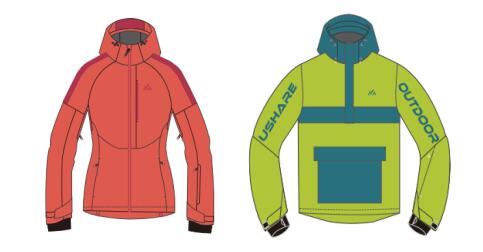
The so-called regular style is the most common style. All major ski clothing brands have this style: simple and elegant and suitable for all ages.
While most of the trendy styles are pullover styles, which look like hoodies. It is more suitable for young people to play snowboarding, because snowboarding is relatively cooler, and paired with loose ski clothes, it looks more fashionable and energetic.
Divided by thickness: single layer shell ski wear, insulated ski wear
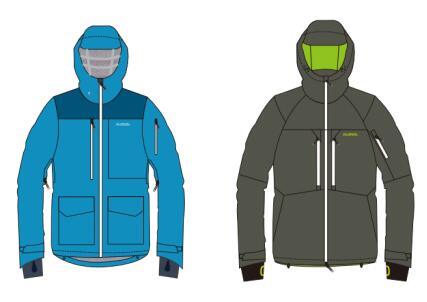
Single layer ski suit is often referred to as shell. It has only one layer, is thinner, and has relatively poor warmth retention. But in fact, most of the time, we don’t rely on the outer layer of ski clothing to keep warm. The main function of ski clothing is windproof, waterproof and breathable.
Insulated ski suit usually with hollow cotton, DuPont cotton, Thinsulate cotton, or down filling. The main purpose is to keep warmth. If you are in extremely cold conditions, it is necessary to wear thickened ski clothes.
2 How to wear ski clothes
The most common way to wear ski clothes is in three layers:
The first layer: quick-drying layer : in the innermost layer, it is best to be tight-fitting, ordinary tight-fitting quick-drying clothes will suffice. Although the ski resort is cold, you can easily sweat when exercising. The biggest function of quick-drying clothes is to absorb sweat and dry quickly to keep the body dry.
The second layer: the thermal insulation layer: the temperature in the ski resort is still very low, so the warmth mainly relies on the middle thermal insulation layer, which is usually made of fleece or down. Fleece has good breathability, and down has better warmth retention (for down, just choose a light and thin model). You can choose according to the temperature of the ski resort. If the temperature is very low, such as -15°C, you can wear two mid-layers; if the weather is sunny and the temperature is high, you can even wear no mid-layer.
The third layer: windproof and waterproof layer: That's what we call a ski wear. The main function of this layer is to be windproof, waterproof, breathable, and wear-resistant.To keep dry and comfortable all day long in ski slopes.
3 Functions of ski clothing
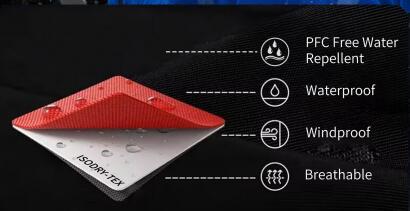
The first point: waterproof ski suits
There is no doubt that you will have to deal with snow when skiing. Novices may fall frequently, and experts may ski powder snow. The snow will definitely get on the body. If it is not waterproof, the clothes will get wet quickly.Then there's the biting cold in the snow
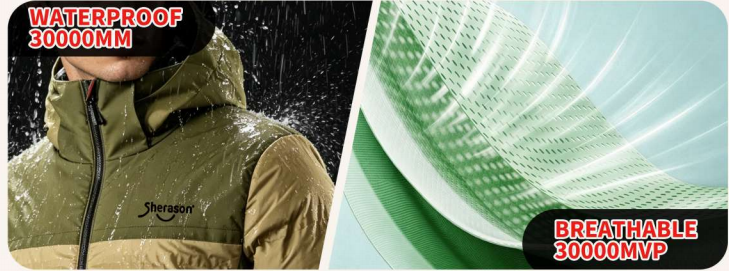
The normally waterproof index of ski wear is between 5000-20000 mm.
10000mm waterproof index: even if it is flushed with a 10-meter-high water column for one hour, it will still be impermeable.
Second point: breathable ski jackets and pants
As mentioned before, skiing will generates heat quickly. If the heat in the body is not discharged in time and accumulates inside, sweating will increase, and quick-drying clothes will no longer work.
The normally breathability index is between 5000 g/m2/24h to 40000 g/m2/24h
Breathability index of 10000 g/m2/24h means 10000g of moisture can be transmitted per square meter in 24h.
Compared with waterproofing, breathability is more difficult to achieve. Plastic bags are waterproof, but are they breathable?
However,the zippers will make up for it.
Usually there are zippers under the armpits or even on the inner thighs of ski suits to increase breathability and better ventilation.
Three point:water resistant ski wear
The ski wear has undergone treatment with a durable water repellent (DWR) coating or PFC Free water repellent, rendering it resistant to water penetration. This feature allows for the outer fabric of the garment to reject water, thus ensuring the wearer stays dry in light rain or snow. However, it's noteworthy that while water-resistant ski wear can repel water, it's not entirely waterproof. In case of heavy rain or prolonged periods of snow, waterproof ski wear is recommended to keep the wearer dry.
What Do Children Need To Pay Attention To When They Go Skiing Outdoors
Bio Based PA56 Fabric Used In Our New AW26 Waterproof Jacket Collection
Related Article