The Key Factors Affecting The Quality Of Outdoor Clothing Fabric

The Key Factors Affecting The Quality Of Outdoor Clothing Fabric
Outdoor functional clothing is often expensive due to its complex manufacturing process. Outdoor fabrics can be divided into two categories: one is used for outdoor sports clothing fabrics, such as mountaineering, skiing, etc. Its style is strong, with high-performance requirements, suitable for sports and harsh environments, to provide protection. The other category is outdoor leisure fabrics, defined as clothing that can be worn outdoors for leisure activities. These fabrics are characterized by fine workmanship, soft texture, and comfortable wearing.


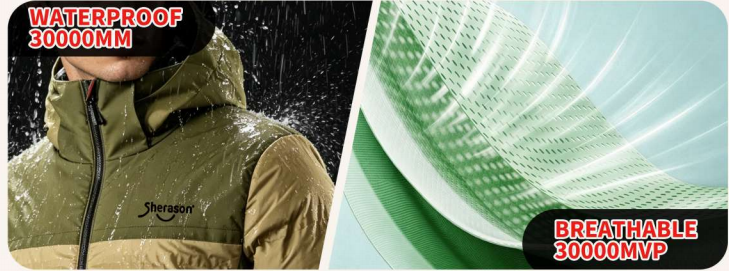
The manufacturing process of these outdoor fabrics is more complex than that of traditional fabrics, involving multiple processing steps, and combining a variety of functions such as water resistance, wind resistance, air permeability, pressure resistance, warmth, moisture absorption, and UV protection. Therefore, it is essential to control the quality of textiles during the production process.

Outdoor sports fabrics are generally made of nylon, polyester, and other synthetic fibers, and then processed to provide various functional properties such as waterproof, crimping, dry and wet coating. These fabrics are characterized by water resistance, air permeability, moisture absorption, water pressure resistance, and UV resistance. Therefore, the quality of these fabrics must be guaranteed from the source. In addition, it is important to discuss the physical property tests required for the fabric:
1. Feel: soft, outdoor sports fabric is hard. However, in order to improve the feel of new products that have been developed, outdoor leisure fabrics are generally softer than outdoor sports fabrics.
2. Slope: according to the American standard test ASTM D3882 for dyed fabrics, the effective width requirement is 3%, and for check and printed fabrics is 2%. If the skew exceeds the standard range of the United States, it is easy to cause deformation and deformation of clothes after washing, so as to pass the pattern and the printed fabric is asymmetrical and not beautiful.
3. Density: the American standard test ASTM D3775 requires the longitude and latitude density within ±3% to be considered qualified.
4. Weight: the American standard test ASTM D3776 requires the weight to be within ±3%.
5. PH value: US standard test AATCC-81 requirements range is 4.5-7.5, and the human body is slightly acidic. If the pH is alkaline, it can cause skin irritation and discomfort.
6. Tear strength: ASTM D1424 test has specific requirements for different types of fabric, in the warp and weft tear strength is measured in kilograms (KG), pounds (LB), or Newtons (N) as units. Tear strength affects wear resistance and durability of clothing.
7. Tensile strength: ASTM D5034 has specific requirements for different types of fabrics, and the units of tensile strength in the warp and weft are KG (KG), LB (LB), or Newton (N). Tensile strength affects the wear resistance and durability of clothing.
8. Seam slip: ASTM D434 test, measuring the seam strength of different types of fabric, expressed in millimeters. The strength of the seams affects the slip ability of the garment, which is crucial to the structure of the garment.
9. Shrinkage rate: the American standard test AATCC-135 requires the warp and weft tolerance of ±3%. If the shrinkage rate exceeds 3%, it will affect the size and shape of the clothes after multiple washes.
10. Light resistance: American standard test AATCC-16E requires 4 specific lights 20 hours, 3 hours 40 hours. The test measures the fabric's resistance to sunlight exposure, which is important for outdoor activities such as skiing and mountain climbing. The color fastness of the fabric is also crucial for visibility in an emergency.
11. Friction fastness: American standard test AATCC-8 requires dry friction level 4, and wet friction level 3. This test measures how faded the fabric is.
12. Fastness to water: the American standard test AATCC-107 requires a discoloration grade of 4 and a coloring grade of 3. This test assesses the color fastness of cotton, nylon, polyester, wool, acrylic, acetate and other fabrics.
13. Fastness to washing: the American standard test AATCC-61-2A requires a discoloration grade of 4 and a coloring grade of 3. This test assesses the color fastness of the fabric after washing.
If you are looking for the right outdoor clothing, please visit our website www.ushareoutdoors.com, I'm sure you won't be disappointed!

Recycled Fabric Has Been Widely Used In Outdoor Garments
Maximize Your Camping Experience with Our Top-Rated Camping Jacket
Related Article