Three Layers Of Clothing Commonly Used In The Outdoors--A Must Have Dressing Tip

The three-layer approach means that when it comes to outdoor clothing, it is divided from the inside out into a base layer (inner layer), a warm layer (middle layer) and a protective layer (outer layer).
The three-layer approach is the most widespread theory of outdoor dressing, however 'three-layer' does not mean 'three' pieces of clothing, but rather the use of multiple pieces of clothing to create three layers: outer, middle and base. Layers of clothing are used to provide reliable protection from the weather and to ensure freedom of movement.
Three layers are not the same as three pieces. It can be three pieces or more, but usually, not three. The three-layer method of dressing is not exclusive to the outdoors. This method of dressing comes from everyday life and has been handed down, not invented by anyone. The ancients still follow this method of dressing for cold weather, the difference is simply that there is not such a professional three-layer call. Closer to home, we wear shirts and jumpers in winter, and a jacket when we go out, which is also a standard three-layer dressing.
Layer 1--Base layer
Garment type: wool underwear, quick-drying underwear
Primary reference: warmth, sweat absorption
Secondary reference: quick drying, light weight
As an intimate layer, the main role of the base layer is to wick away perspiration and keep you warm, both of which are of equal importance. From the point of view of temperature loss prevention, warmth is a basic prerequisite, but quick drying, breathability and perspiration wicking are equally important.
Layer 2--Warmth
Main reference: lightweight, warm, quick-drying, breathable Secondary reference: waterproof, sun protection
The main function is to keep you warm, and the other is shock absorption. Because the fabric and workmanship are fundamentally different from those of the outer layer, the warm layers are mostly soft to the touch, hence the name softshell. In the three-layer method of dressing, the soft shell is the middle layer that makes up for the uncomfortable stiffness of the outer layer and provides a certain degree of shock absorption and protection.
Layer 3--Protective layer
Type of clothing: waterproof jacket, down jacket
Primary reference: windproof, waterproof, scratch-resistant
Secondary reference: light weight, warmth, breathability
As the name suggests, its role is mainly to protect the body from injury. It is what we commonly refer to as a rash jacket, mostly in the form of a hard shell. The latter is significantly more graphic, like a tortoise shell, giving the body the strongest protection in complex natural conditions.
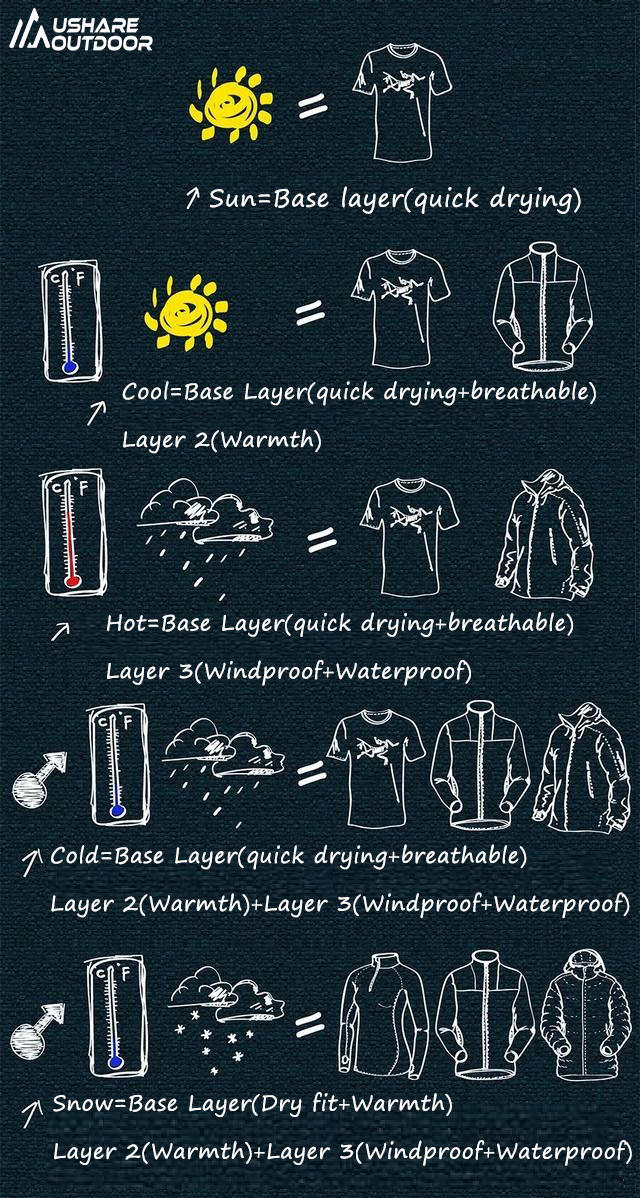
It is important to remember that the "three-layer rule" does not mean that the more you wear, the warmer you are. The best way to keep warm outdoors is to mix and match different garments according to their functionality. Here are some tips on how to mix and match.
Each person has different habits depending on their environment and personal fitness level.
How To Choose Professional Ski Down Jackets Manufacturers For A New Wholesaler?
Recycled Fabric Has Been Widely Used In Outdoor Garments
Related Article